Novara – S. Nazzaro Sesia (54.9 km)
Le risaie di Woodstock
Chi non cerca trova. Oppure chi cerca, trova qualcos'altro. Esci per portare a spasso il cane e invece che pestare una merda pesti un biglietto da cinquanta euro (a me è successo, ma solo una volta, purtroppo). Oppure vai a far la spesa al supermercato e incontri l'amico arricchito che ti offre una crociera di due settimane sul suo bialbero ormeggiato a Finale Ligure (mai successo, ma non si sa mai). Oppure parti per visitare un'abbazia medievale e ti trovi in una comunità tipo Peace and Love che vive restaurando vecchie cascine abbandonate.
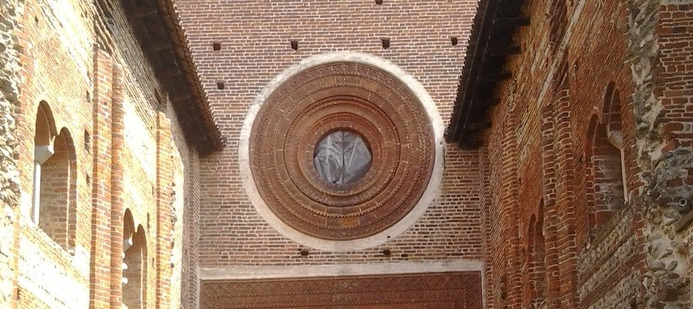
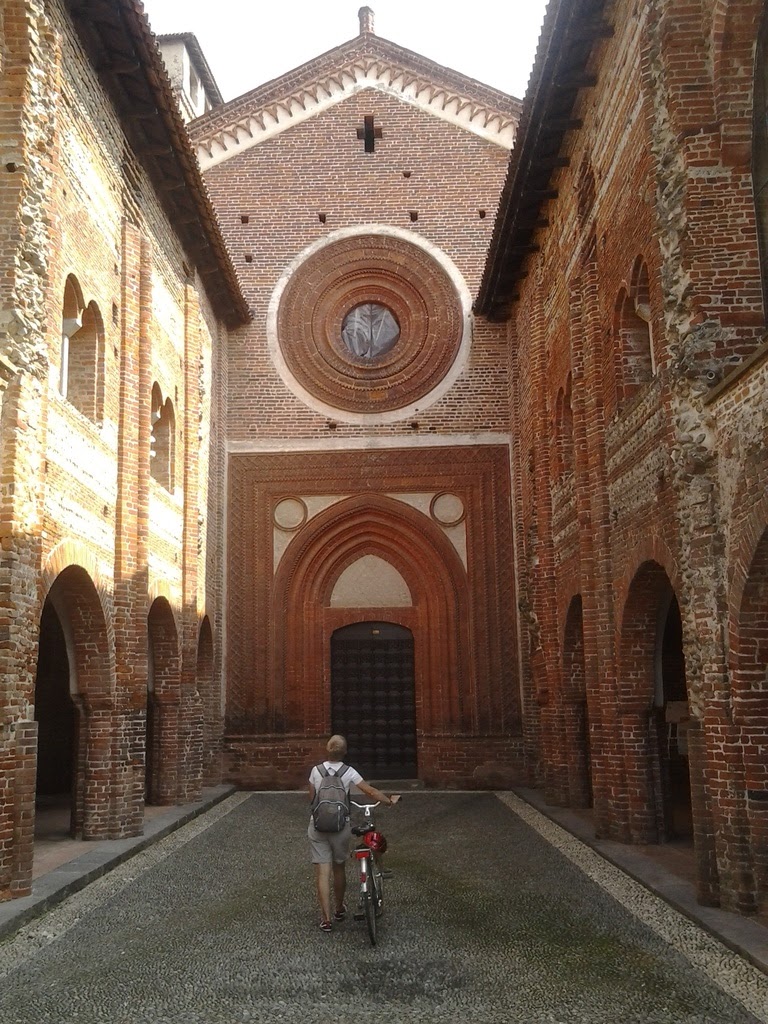
Il programma prevede un giro ad anello con destinazione principale S. Nazzaro Sesia, paesino in sé poco significativo ma dotato di una splendida abbazia che si è sviluppata attraverso ben quattro secoli, fra l'XI e il XV. Usciti da Novara nel casino di Corso Vercelli deviamo prima verso Casalgiate e poi direttamente su sterrato attraverso le risaie, che oggi sono in piena modalità “Van Gogh” (vedere il post Le fonti del riso).
A completare l'idilliaco paesaggio campestre incontriamo mazzi di aironi: nei campi, appollaiati sugli alberi, lungo la strada. Ce ne sono così tanti da far sembrare i piccioni di Piazza Duomo una specie in estinzione. Francesco non riesce a capire perché ogni volta che vediamo un airone io e Meri sembriamo uscire di senno, come se avessimo visto un panda giocare a briscola con un dromedario in Piazza Cavour. Gli spieghiamo che una trentina d'anni fa gli aironi erano veramente merce rara, tanto da far intitolare una delle più famose riviste di viaggi e natura Airone (anche se pare che oggi vogliano cambiarle il nome e chiamarla Piccione).
A S. Nazzaro ci fermiamo per un panino al tavolino da pic-nic del XX secolo che orna un angolino del prato a fianco dell'abbazia e nel frattempo corro su Wikipedia a cercare di riempire i miei abissi di ignoranza sulla storia e lo stile di questo posto. Non sto a ripetere quello che comunque potete trovare qui, ma non posso non parlare della mia sorpresa quando scopro che l'abbazia nasce nel 1040 per volere del vescovo di Novara Riprando.
Questo nome potrebbe risultare insignificante, ma a me e Meri riporta indietro di almeno vent'anni, quando leggemmo il romanzo Odo e Riprando, dell'autore novarese Tripeleff. Cercando sulla rete scopro che il romanzo è liberamente scaricabile e leggibile a questo indirizzo (http://www.tripeleff.org/riprandiana/prima-storia/index.html). Occhio però, che è un romanzo del tutto fuori dal consueto e adatto solo a chi non abbia paura di sapori forti e speziati. Lettore avvisato....
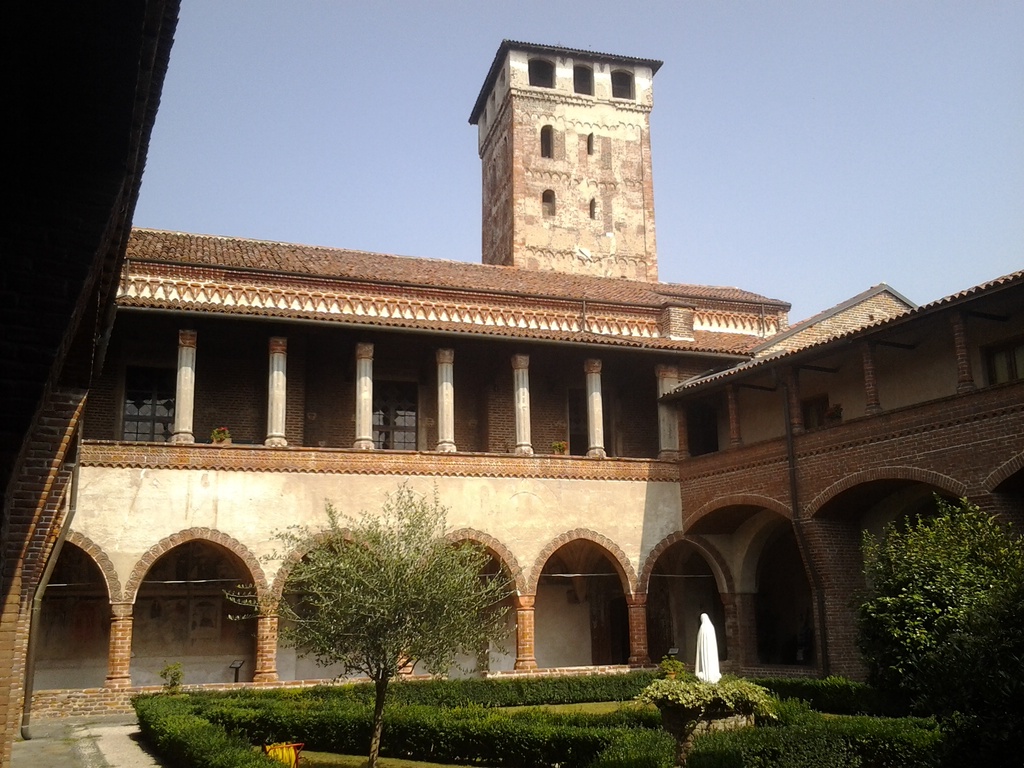
Scatto qualche foto di nascosto alla facciata, al chiostro e al campanile. Di nascosto, perché un cartello ci informa che non è consentito effettuare foto o riprese senza l'autorizzazione del parroco. Dove sia il problema mi sfugge ma fa nulla.
Prima di ripartire tentiamo una visita al museo dei ceppi, un museo dove sono raccolte delle specie di sculture lignee fatte con ceppi di legno raccolti sulle sponde del Sesia. Fallita la visita causa museo chiuso ripartiamo, direzione sponde del Sesia e poi ritorno via Casalbeltrame.
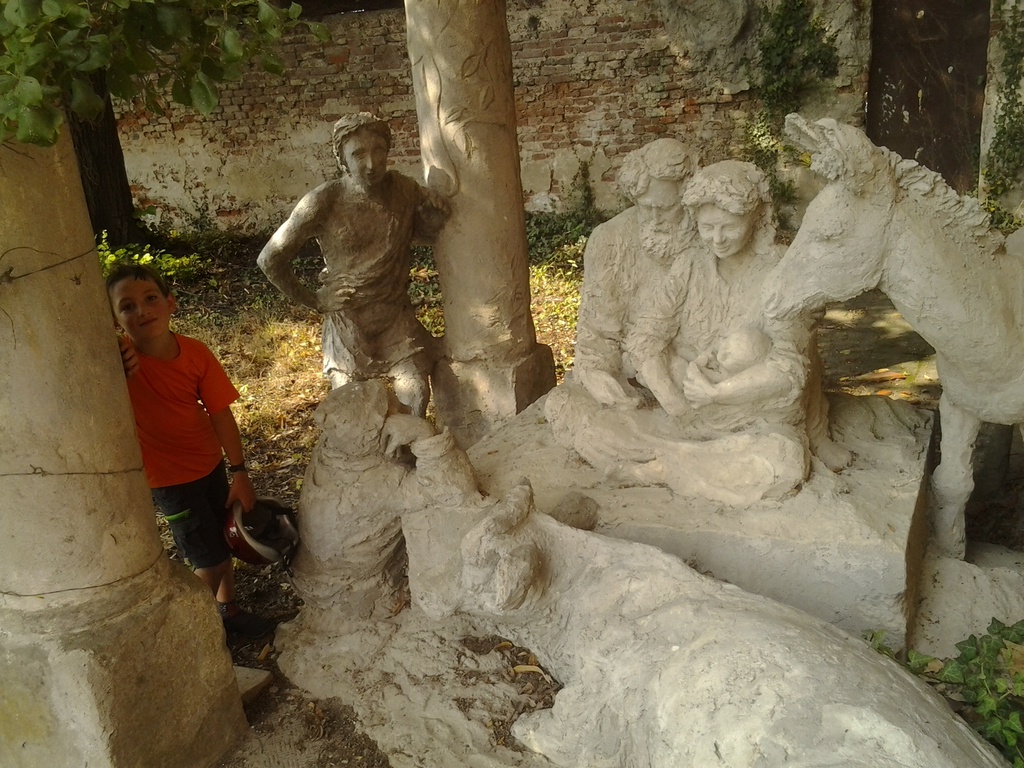
È lungo il ritorno che notiamo un presepe particolare, con figure in scala 1:1 realizzato in cemento e addossato al lato di una cascina. È bello, sorprendente e un po' fuori fase rispetto alla costruzione e al paesaggio. Sul portone che conduce all'interno della cascina una scritta: Ricostruttori. Decidiamo che la curiosità va soddisfatta, per cui entriamo.
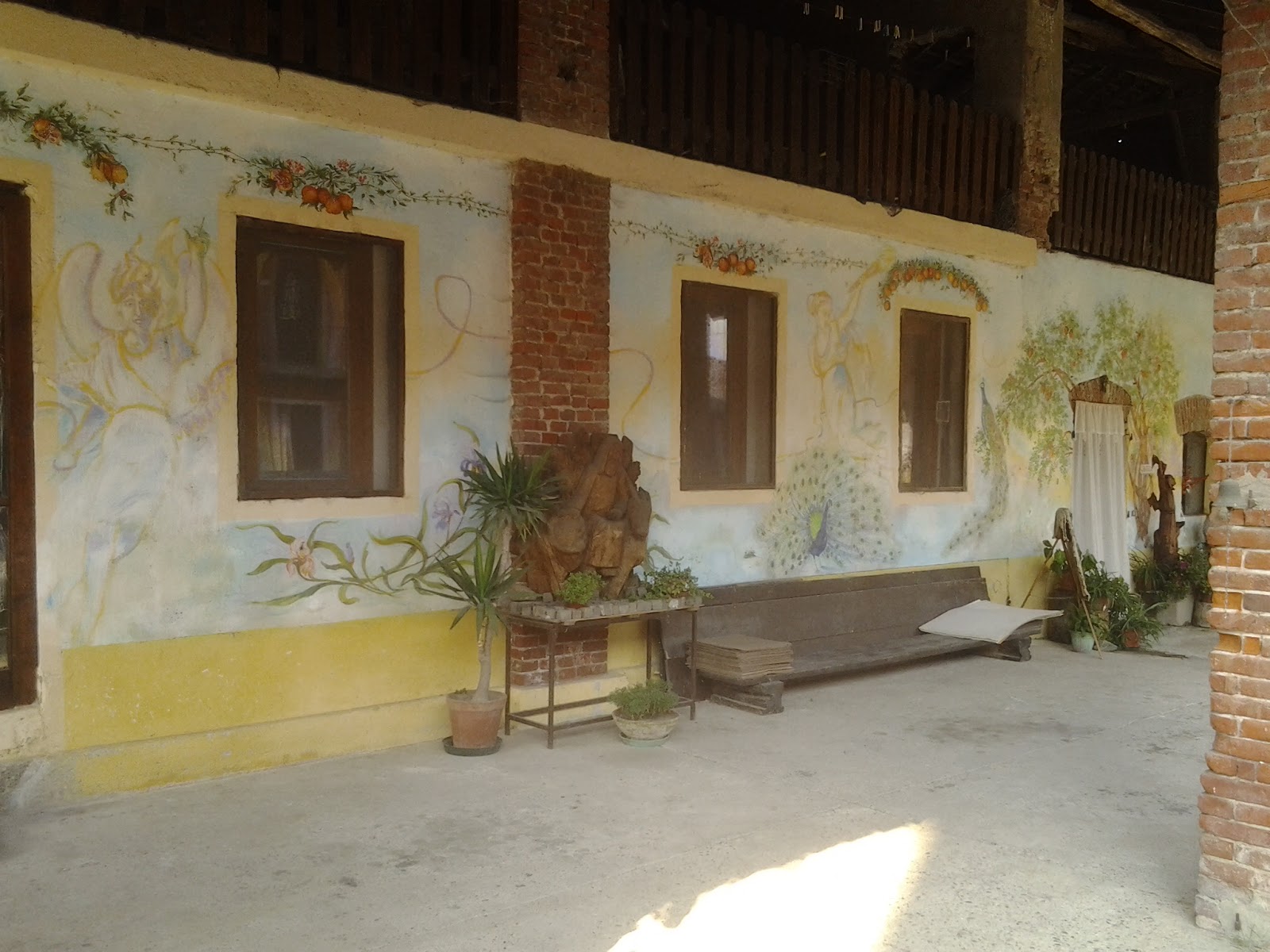
Il cortile è una specie di cantiere con 4-5 muratori che stanno restaurando una facciata. Chiediamo informazioni e ci viene incontro Paolo, uno dei lavoratori, bello robusto e barbuto, come del resto sono barbuti tutti gli altri. Paolo ci racconta di loro e del posto. I ricostruttori sono una sorta di congregazione religiosa che ha come missione quella di avvicinare la gente alla meditazione e alla preghiera. Lo fa restaurando vecchi cascinali in rovina comprati per un tozzo di pane (si fa per dire), vivendoci dentro e organizzando attività di vario tipo (corsi, spettacoli, conferenze). L'ambiente è strano, sembra di essere tornati indietro di una 40-50ina d'anni e di essere finiti in una comunità hippie, tipo quella descritta in modo magistrale da Gianni de Luca e Gianluigi Gonano nell'episodio Il caso della freccia del Commissario Spada (mitico fumetto degli anni '70, che vi potete leggere qui). I muri delle parti restaurate sono decorati con affreschi multicolori che richiamano non solo alla religione cattolica, ma anche ad altre religioni (buddhista, induista).
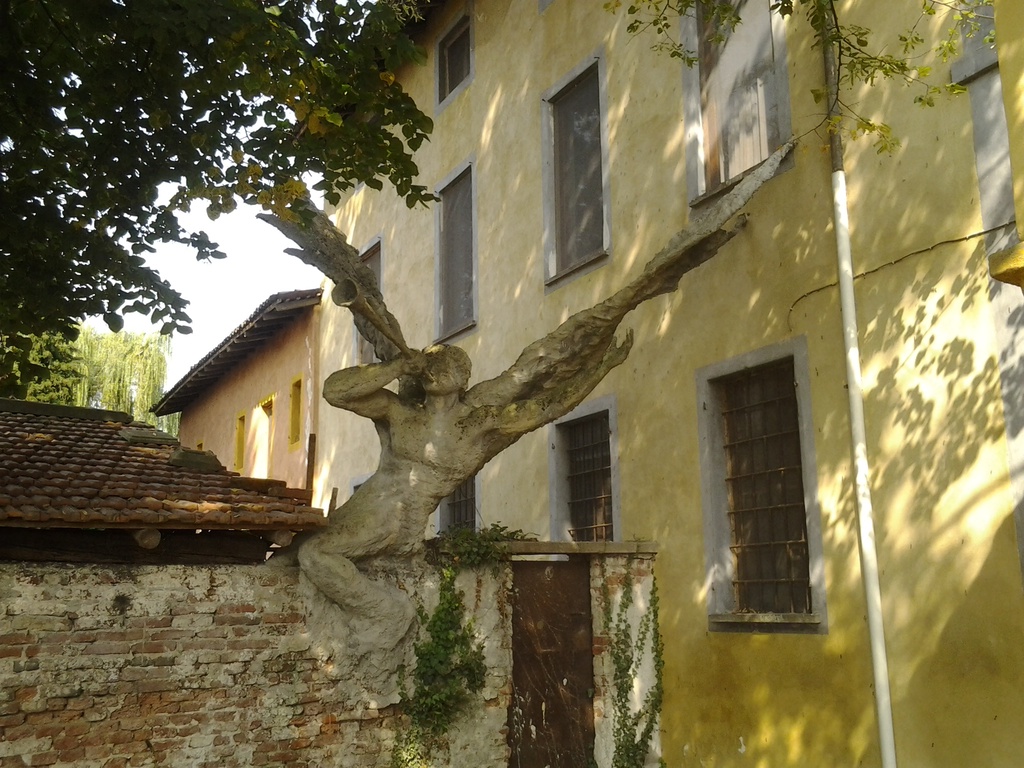
Paolo ci racconta anche del luogo. La cascina S. Apollinare non è una cascina qualsiasi, ma nientemeno che un avamposto templare del XIII secolo che era utilizzato come punto di appoggio dai cavalieri templari nei loro viaggi (non propriamente turistici) da e verso la Terra Santa. Il chiostro (ancora totalmente incolto) ha le pareti affrescate stile hippie con immagini prese dalle leggende templari e dai miti del Sacro Graal. Rimaniamo una mezz'ora circa e Paolo ci guida attraverso le aree restaurate, ed utilizzate per le loro attività, e quelle ancora da restaurare, come la chiesetta al cui esterno abbiamo visto il presepe e al cui interno sono custodite le reliquie di Santa Esuberanza una santa bambina di cui non abbiamo trovato alcuna traccia se non sui vari siti dei Ricostruttori. Chitarre e strumenti musicali sono sparsi un po' ovunque.
Ci lasciamo per tornare a Novara che ci sembra di conoscerci un po', e con la voglia di capire un po' di più di questo luogo e di questa gente. Vedremo che succederà, se qualcosa succederà.
The Woodstock Rice Fields
"Who doesn’t look, finds. Or, who looks, finds something else." You go out to walk the dog and instead of stepping in a pile of poop, you step on a fifty-euro bill (happened to me once, unfortunately just once). Or you go grocery shopping and run into a wealthy friend who offers you a two-week cruise on his two-masted boat docked in Finale Ligure (never happened, but you never know). Or you set out to visit a medieval abbey and end up in a Peace and Love community restoring old abandoned farmhouses.
The plan is for a loop tour with the main destination being S. Nazzaro Sesia, a small town that’s not very significant in itself but boasts a beautiful abbey that developed over four centuries, from the 11th to the 15th century. Leaving Novara amidst the chaos of Corso Vercelli, we first head towards Casalgiate and then directly onto dirt roads through the rice paddies, which today are in full “Van Gogh” mode (see the post The Rice Sources).
Completing the idyllic countryside scene, we encounter flocks of herons: in the fields, perched in the trees, along the road. There are so many that they make the pigeons in Piazza Duomo look like an endangered species. Francesco can’t understand why every time we see a heron, Meri and I seem to go crazy, as if we’ve seen a panda playing cards with a dromedary in Piazza Cavour. We explain that about thirty years ago, herons were truly rare, so much so that one of the most famous travel and nature magazines was named Heron (although it seems they now want to change it to Pigeon).
In S. Nazzaro, we stop for a sandwich at a picnic table from the 20th century that adorns a little corner of the lawn next to the abbey, and in the meantime, I run to Wikipedia to fill in my gaps of ignorance about the history and style of this place. I won’t repeat what you can find here, but I have to mention my surprise when I discover that the abbey was founded in 1040 by the bishop of Novara, Riprando.
This name might seem insignificant, but to Meri and me, it brings back at least twenty years, to when we read the novel "Odo and Riprando" by the Novarese author Tripeleff. Searching online, I discover that the novel is freely downloadable and readable at this address (http://www.tripeleff.org/riprandiana/prima-storia/index.html). However, beware, as it’s a completely unconventional novel and suitable only for those who are not afraid of strong and spicy flavors. Reader warned....
I sneak a few photos of the facade, cloister, and bell tower. Sneakily, because a sign informs us that taking photos or videos without the priest’s permission is not allowed. I can’t see what the problem is, but never mind.
Before heading back, we attempt to visit the museum of stumps, a museum where various wooden sculptures made from tree stumps collected from the Sesia banks are displayed. The visit fails due to the museum being closed, so we head back, direction Sesia banks, and then return via Casalbeltrame.
On the way back, we notice a peculiar nativity scene, with life-size figures made of cement and attached to the side of a farmhouse. It’s beautiful, surprising, and a bit out of sync with the construction and landscape. On the door leading inside the farmhouse is a sign: "Reconstructors." We decide that curiosity must be satisfied, so we go in.
The courtyard is like a construction site with 4-5 masons restoring a facade. We ask for information and are approached by Paolo, one of the workers, who is robust and bearded, as are all the others. Paolo tells us about them and the place. The Reconstructors are a kind of religious congregation whose mission is to bring people closer to meditation and prayer. They do this by restoring old, ruined farmhouses bought for a song (so to speak), living in them, and organizing various activities (courses, performances, conferences). The environment is strange, as if we had traveled back 40-50 years and ended up in a hippie community, like the one described so masterfully by Gianni de Luca and Gianluigi Gonano in the episode "The Case of the Arrow" from the Commissario Spada series (a classic 70s comic, which you can read <a href="quil">here). The walls of the restored parts are decorated with colorful frescoes that refer not only to Catholicism but also to other religions (Buddhist, Hindu).
Paolo also tells us about the place. The S. Apollinare farmhouse is no ordinary farmhouse, but rather a Templar outpost from the 13th century that was used as a base by the Knights Templar on their not-so-touristic travels to and from the Holy Land. The cloister (still completely uncultivated) has walls painted in a hippie style with images from Templar legends and the myths of the Holy Grail. We spend about half an hour, and Paolo guides us through the restored areas, used for their activities, and those still to be restored, like the small church where we saw the nativity scene outside and which houses the relics of Saint Esuberanza, a child saint of whom we found no trace except on the various Reconstructors' websites. Guitars and musical instruments are scattered around.
We leave to return to Novara, which now feels a bit familiar, and with a desire to understand a bit more about this place and these people. We’ll see what happens, if anything happens.
Clicca sul menu della mappa per scaricare la traccia GPX e per visualizzare l'altimetria