Novara – Granozzo – Lumellogno (32 km)
Agonie
Due stivali verdi su uno sterrato. Mezzo grado più in su, una doppietta a tracolla. Qualche metro più avanti un segugio gioca col fiuto strusciando il tartufo fra i cespugli. Frammenti che attivano il mio orobilogio. A differenza di quello di Saltatempo (nell'omonimo romanzo di Benni) il mio orobilogio non sa andare avanti ma solo indietro, come per tutti del resto. Ma è comunque una reazione a catena di frammenti freschi che scalzano frammenti vecchi dal fondale limaccioso dei ricordi dimenticati.
Il centro di questo ricordo è mio padre. Uomo buono, mite e taciturno, napoletano amante della pianura Padana e della nebbia. Cacciatore e cercatore di chiodini. Il satellite sono io, bambino, che a caccia e a funghi non ci volevo mai andare mentre lui mi voleva con sé, perché non puoi non condividere ciò che ami con chi ami.
Una volta l'ho quasi ammazzato, mio padre. Eravamo sulle colline di Fara a cacciar fagiani. Preso dall'avventura sento un rumore: "Un fagiano, papà ti aiuto" e tocco il fucile a tracolla per togliere la sicura. Giuro che non so ancora oggi cosa sia successo, ma il fucile ha sparato, con la canna a cinque centimetri dal suo orecchio sinistro. Non mi sgridò neppure, cercò solo di tranquillizzarmi, anche se oggi penso che i suoi tre infarti e la sua morte a 52 anni forse sono dipesi un po' anche da quell'evento.
Se questo fosse un romanzo ora scriverei che da quel giorno non tornai più a caccia, ma la realtà è che non mi ricordo cosa feci. Forse ci sono ancora tornato qualche volta, sempre di malavoglia. Quel che mi ricordo è che un bel po' di anni dopo andai a votare al referendum contro la caccia, e mio papà mandò giù il rospo a fatica. Chissà com'è il regolamento venatorio nei verdi pascoli; non so perché ma ho l'idea che lì sia un parco nazionale infinito e, comunque, i due fucili se li è dimenticati qui, per cui se ne sarà pur fatta una ragione.
Uomo buono e mite, dicevo, a dispetto della doppietta e dei fagiani alla cacciatora. Quando è venuto al nord ha passato cinque anni in finanza al confine con la Svizzera. Allo scadere del quinto anno si era fatto amico tutti quanti: colleghi, capi e contrabbaddieri. "Erano povera gente con famiglia", mi diceva, e non ce la faceva proprio a pizzicarli mentre valicavano il confine con lo zaino stracolmo di Marlboro di contrabbando.

Malgrado i suoi studi fossero fermi, a far tanto, alla quinta elementare, la sua vera vocazione era quella di insegnante, che trovò la sua realizzazione nella scuola guida. A casa era sempre tranquillo, come se la vita fosse un bicchiere di acqua fresca da sorseggiare in piscina. Mia madre, che sapeva bene i pensieri e le tribolazioni del suo uomo preso fra la concorrenza dei colleghi e le capetoste delle vedove sessantenni e spatentate, non si spiegava dove trovasse tutta quella tranquillità.
Lo capì una domenica, quando papà tornò a casa scosso come non mai: era nei boschi e un passante lo aveva beccato a sparar fucilate mentre urlava minacce indicibili. Fortunatamente lo sventurato ebbe il tempo di rendersi conto che la vittima non era un essere umano, ma un povero castagno con la corteccia un po' sbucciata dai piombini. Imbarazzatissimo e mortificato, mio padre spiegò che ogni tanto aveva bisogno di sfogarsi, e il suo troppo amore per la famiglia, e il genere umano in generale, lo portava a prendersela con i vegetali immaginando le sembianze di chi minava giornalmente la sua proverbiale pazienza o lo costringeva ad ingoiare rospaccioni indigeribili.
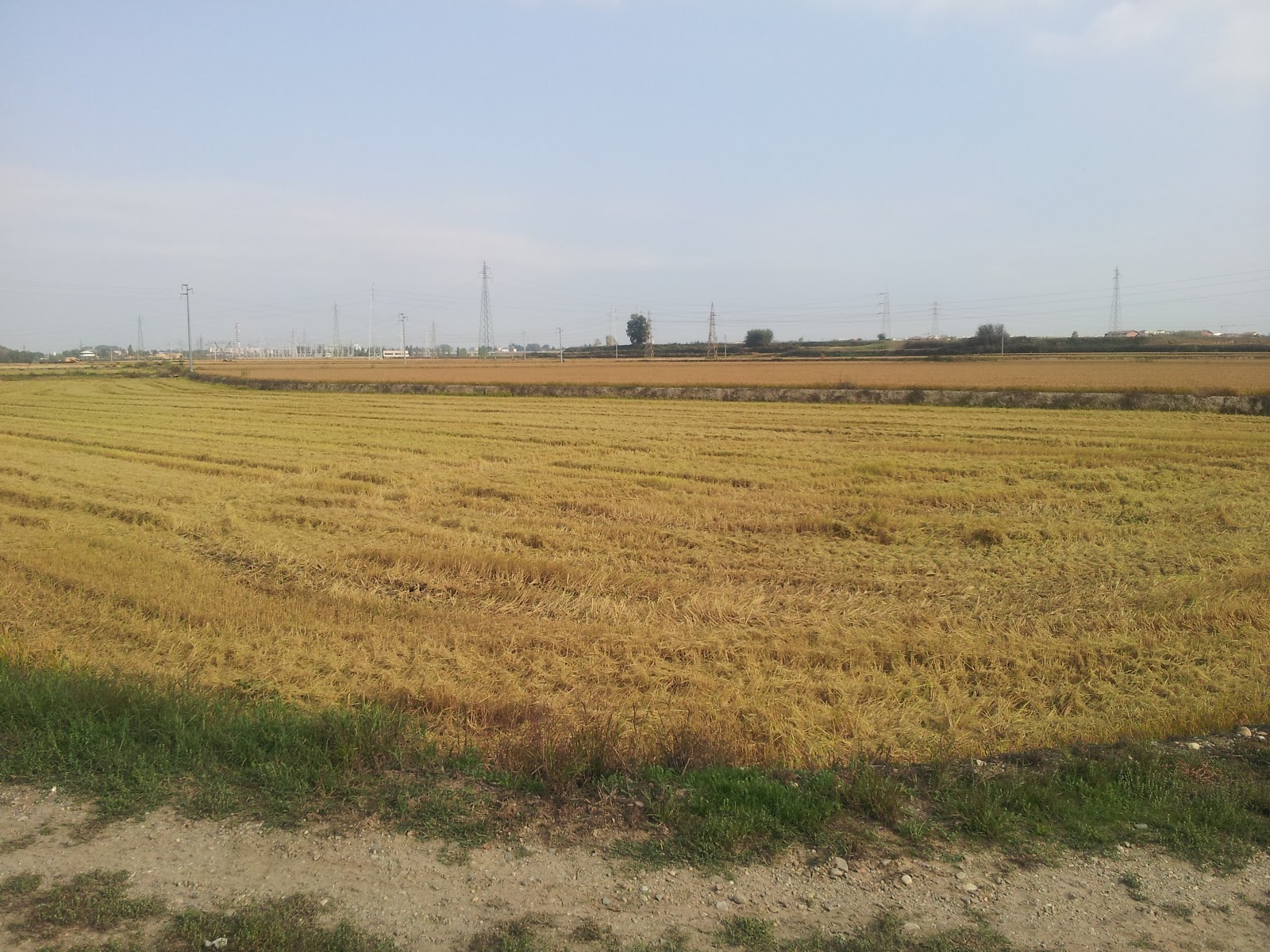
Tutto questo è un flash di un istante mentre pedaliamo lungo la sponda sinistra dell'Agogna appena fuori Novara, in questa mattina dove tutto sembra morente. I fagiani, che verranno forse sforacchiati dai due cacciatori, il riso, impallidito di fronte all'imminente decapitazione, l'estate, che tenta ancora di dire la sua in questa metà di un'ottobre che se la ride, perché sa che tanto questo è il suo tempo. Se l'autunno è da sempre metafora di vita che si spegne un motivo ci sarà pure.
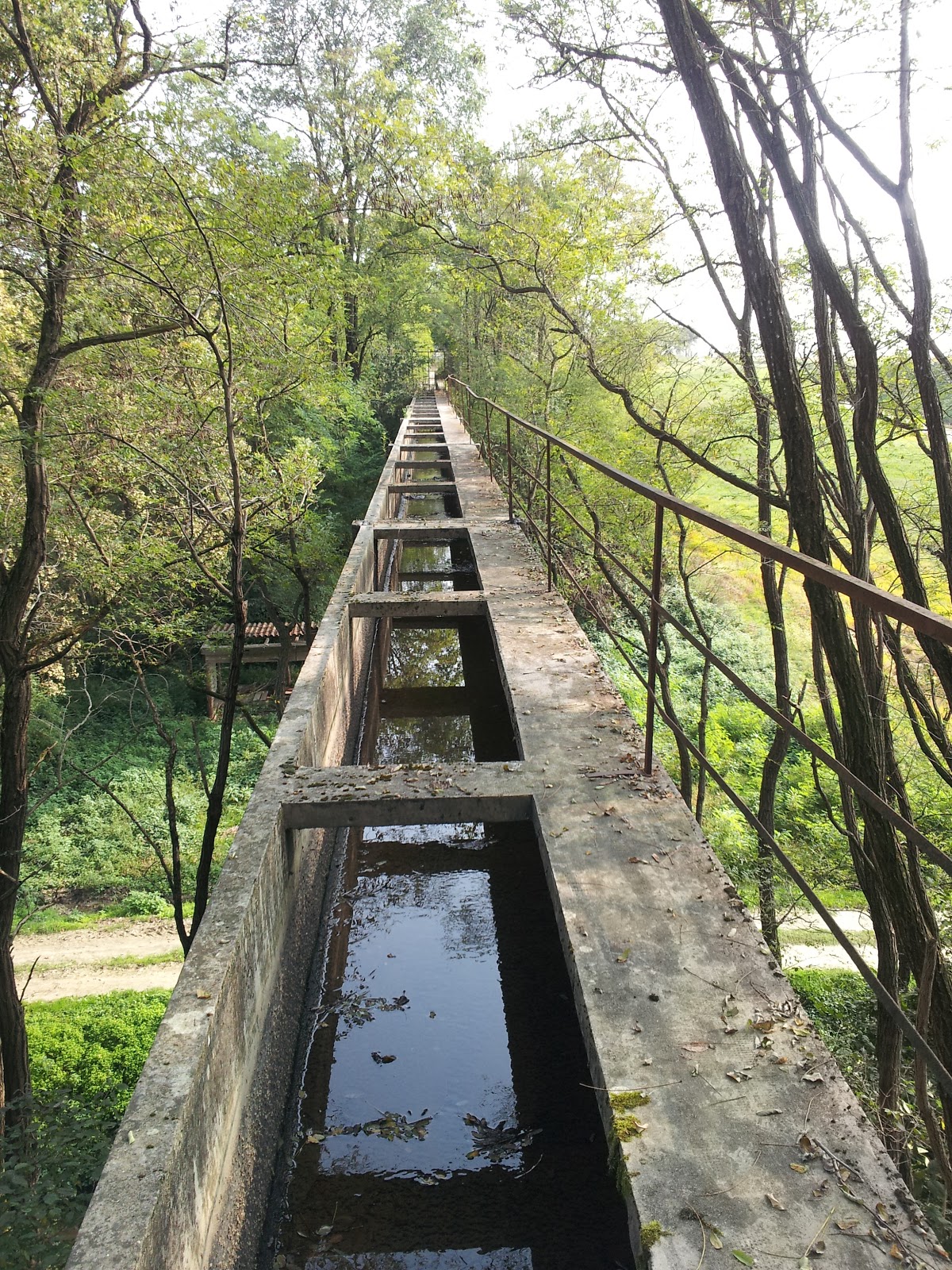
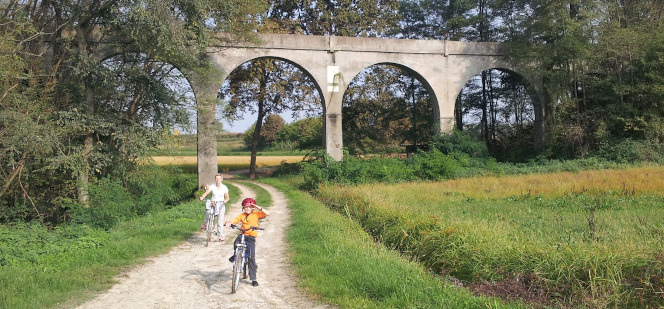
Fra Novara e Nibbiola lasciamo il torrente e la prendiamo alla larga, in una valletta verdeggiante dove passiamo sotto a un vecchio acquedotto, non proprio romano ma di fattezze simili. Lasciamo le bici ed andiamo a curiosare su per una delle due sponde, dove giungiamo a una casa con laghetto privato e un canalino che si incunea nell'alveo dell'acquedotto per andare a irrigare chissà cosa.

Nei pressi di Granozzo con Monticello riacchiappiamo l'Agogna. Qui il paesaggio è divertente, e fa dimenticare i languori autunnali. Pare di essere in un Monferratino, piccolo piccolo, con dei saliscendi che sembrano colline a scartamento ridotto. Ritornando a Novara lungo la sponda destra del torrente facciamo sosta pipì, che di più non ci possiamo permettere, dal momento che non ho portato nemmeno la foto di un panino. Guardo il torrente e mi stupisco di quanto sia bello. Forse perché da sempre il nome Agogna per me ha fatto rima con “fogna” ho sempre snobbato questo corso d'acqua domestico che invece, forse, penso debba avere qualcosa da dire. Non è escluso che ci torneremo.

Agonies
Two green boots on a dirt path. A bit higher up, a shotgun slung over the shoulder. A few meters ahead, a hound playing with its nose, sniffing around the bushes. These fragments trigger my “timewatch.” Unlike Saltatempo’s (from Benni’s novel of the same name), my timewatch doesn’t know how to go forward, only backward—just like everyone else’s, I suppose. But it’s still a chain reaction of fresh fragments pushing old fragments out of the muddy depths of forgotten memories.
The center of this memory is my father. A good, mild-mannered, and quiet man, a Neapolitan who loved the Po Valley and its fog. A hunter and a mushroom forager. The satellite in this memory is me, a child who never wanted to go hunting or foraging while he always wanted me with him, because you can’t help but share what you love with those you love.
Once, I almost killed my father. We were on the hills of Fara, hunting pheasants. Caught up in the adventure, I hear a noise: “A pheasant, Dad! Let me help!” and I reach for the shotgun to take off the safety. I swear, to this day, I have no idea what happened, but the gun fired, with the barrel just five centimeters from his left ear. He didn’t even scold me; he just tried to calm me down, although today, I sometimes think his three heart attacks and his death at 52 might have something to do with that incident.
If this were a novel, I’d write that from that day on, I never went hunting again, but the truth is, I don’t remember what I did. Maybe I went back a few more times, always unwillingly. What I do remember is that many years later, I went to vote in the referendum against hunting, and my dad reluctantly swallowed the pill. Who knows what the hunting regulations are like in the green pastures; for some reason, I imagine it’s an endless national park, and anyway, he left his two shotguns behind, so he must have come to terms with it.
A good and mild man, as I said, despite the shotgun and the pheasants cooked alla cacciatora. When he moved up north, he spent five years in the finance police on the Swiss border. At the end of the fifth year, he had befriended everyone: colleagues, bosses, and smugglers. “They were poor people with families,” he’d tell me, and he just couldn’t bring himself to catch them crossing the border with backpacks full of contraband Marlboros.
Despite his education being limited, at most, to elementary school, his true vocation was that of a teacher, which he fulfilled by teaching at a driving school. At home, he was always calm, as if life were a glass of fresh water to sip by the pool. My mother, who knew well the thoughts and troubles of her man caught between the competition of colleagues and the stubbornness of sixty-year-old widows without a driver’s license, couldn’t understand where he found all that tranquility.
She figured it out one Sunday when Dad came home more shaken than ever: he’d been in the woods, and a passerby caught him shooting while shouting unspeakable threats. Fortunately, the unfortunate passerby realized in time that the victim wasn’t a human being but a poor chestnut tree with its bark a bit peeled off by the pellets. Embarrassed and mortified, my father explained that every now and then, he needed to let off steam, and his overwhelming love for his family, and humanity in general, led him to take it out on plants, imagining them as the people who daily tested his legendary patience or forced him to swallow indigestible toads.
All of this flashes through my mind as we pedal along the left bank of the Agogna, just outside Novara, on this morning where everything seems to be dying. The pheasants, who might soon be peppered by those two hunters, the rice, paled in the face of its imminent decapitation, the summer, which still tries to assert itself in this mid-October that laughs at it because it knows this is its time. If autumn has always been a metaphor for life fading away, there must be a reason.
Between Novara and Nibbiola, we leave the stream and take the long way around, into a green valley where we pass under an old aqueduct—not quite Roman, but similar in appearance. We leave our bikes and go explore up one of the banks, where we reach a house with a private pond and a little canal that runs into the aqueduct’s channel to irrigate who knows what.
Near Granozzo with Monticello, we reconnect with the Agogna. Here, the landscape is fun, and it makes you forget the autumn melancholy. It feels like a tiny little Monferrato, with small ups and downs that seem like hills on a reduced scale. Returning to Novara along the right bank of the stream, we stop for a pee break—nothing more, since I didn’t even bring a photo of a sandwich. I look at the stream and am amazed by how beautiful it is. Maybe because I’ve always rhymed “Agogna” with “fogna” (sewer), I’ve always dismissed this domestic watercourse, which, perhaps, has something to say. It’s not out of the question that we might come back.
Clicca sul menu della mappa per scaricare la traccia GPX e per visualizzare l'altimetria